USFans · English
USFans Size Guide: Compare the Garment, Not Just the Label
Compare USFans garment charts with clothing you own, distinguish flat and body measurements, check each included garment in a set and preserve your chosen size.
On this page
Choose a size from the information for the exact product you want. A familiar S, M or L on a USFans find is a starting point, not a measurement. Different garments can use the same label while having different widths, lengths and shapes.
The most practical comparison is often something you already wear comfortably. Pick a similar garment with the fit you want, lay it flat and compare the dimensions defined by the listing. Do not use a favourite fitted shirt to decide an oversized jacket without allowing for their different purposes.
Decide the fit before comparing numbers
Write down what you want the item to do. A top for layering needs a different comparison from one worn on its own. Shorts intended for sitting and walking need more consideration than whether the waistband can close. Sleeve and body length may matter more to you than a loose chest.
Identify your non-negotiable dimension first. If you dislike short tops, an appealing width does not compensate for insufficient length. If the waist suits you but the thigh measurement is unsuitable, choosing that size has not solved the fit problem.
Find out what the chart measures
Look for whether the values describe a body or the finished garment. A body chest measurement and a garment's flat chest width are not directly interchangeable. Read the chart's diagram or instructions rather than guessing from a column heading.
Keep the units consistent. Inches and centimetres should never be compared as if the numbers describe the same length. When converting, use the same unit throughout your notes and retain the original value so you can check your calculation.
| Dimension | Clarify before comparing |
|---|---|
| Chest | Is it flat underarm width, garment circumference or a body measurement? |
| Length | Where does the measurement start and end? |
| Sleeve | Is it measured from the shoulder seam or another point? |
| Waist | Is the waistband relaxed, stretched or described as a body range? |
| Leg length | Is it inseam or the full outside length? |
If the definition is unclear, ask about that dimension. Do not fill the gap by assuming every seller uses the same method.
Measure a comparison garment consistently
Lay the garment on a flat surface without deliberately stretching it. Smooth obvious folds and place the tape along the same line shown in the product chart. Record the result and how you measured it, not just a number labelled “my size.”
For a flat-width comparison, measure both garments flat. For length, use matching endpoints. A different starting point can make two otherwise similar items appear different. Elasticated sections also need a consistent state; a relaxed waistband cannot be compared directly with a stretched one.
Repeat a surprising measurement before changing your choice. A folded hem, angled tape or misread unit can produce a difference that is not really there. This is a check of your method, not a reason to force the numbers to match what you hoped to buy.
Check each garment in a set
A coordinated outfit can make styling easier while complicating sizing. One garment may suit your preferred fit while another does not. Examine the information for each included piece and find out whether the available size option applies to the whole set.
This grey Essentials set on OG is a place to inspect that type of find. First confirm which pieces the selected option includes, then compare their sizing information before treating the set as a replacement for separately selected garments. If the combination does not work for you, choosing separates is a reasonable outcome—not a failed attempt to find the “right” letter.
The outfit-planning page helps you decide whether a set or separate pieces better fills the gap in your wardrobe.
Keep the size choice with the product link
Save the intended size, colour and the measurement that drove the choice. If you return to another listing with a similar picture, do not transfer the size automatically. Compare that product's own information.
For example, a note such as “compare body length with my everyday tee” is more useful than “buy medium again.” It preserves the reason for the choice when you revisit the shortlist. The USFans links organiser provides a simple way to keep alternatives separate.
Use a photo measurement to answer one remaining question
If measurement photos are available or can be requested, specify the dimension and endpoints. A picture should let you see the start of the tape, the relevant garment edge and the reading. A tape disappearing outside the frame does not settle the question.
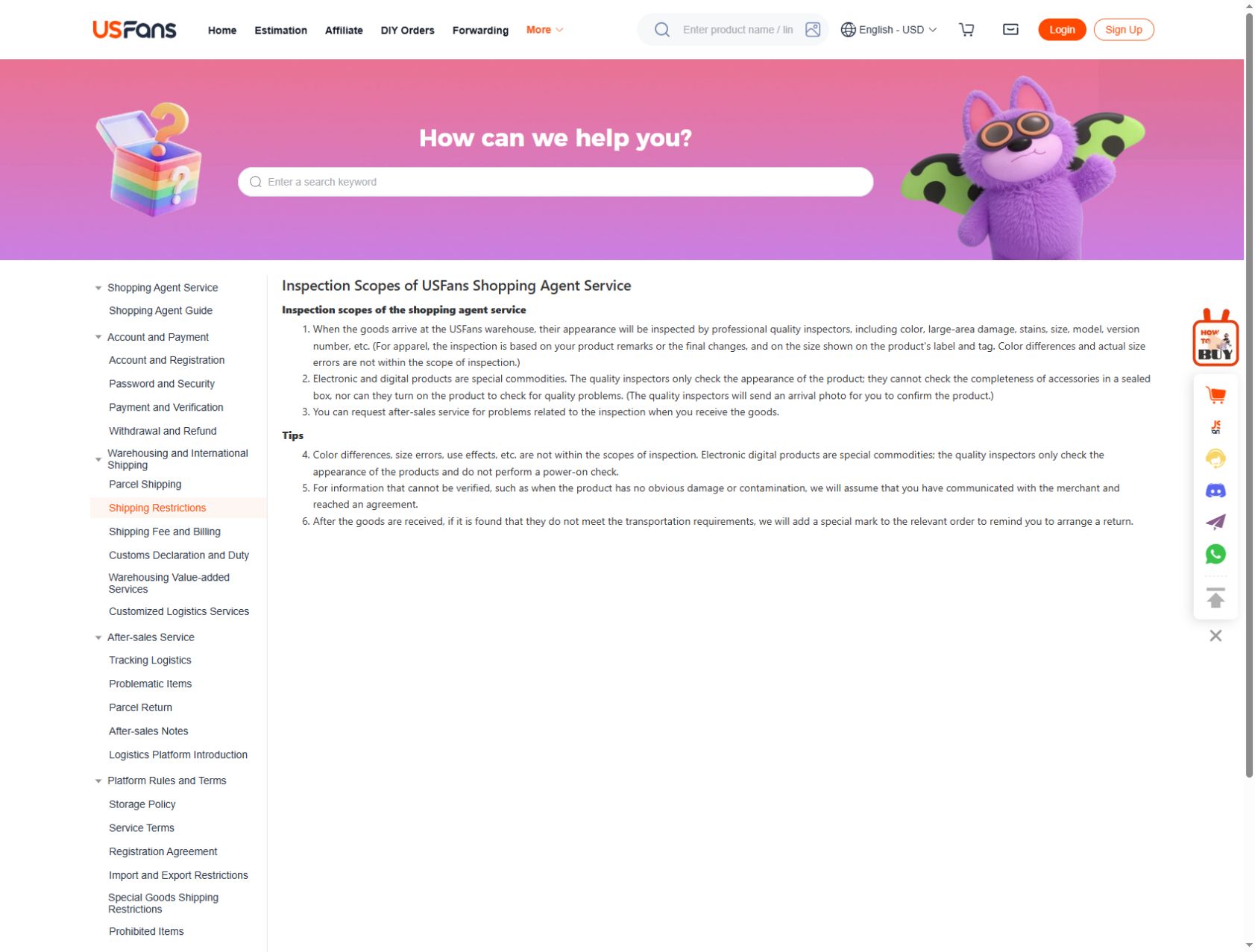
USFans' inspection policy checked on 30 September 2026 distinguishes appearance and labels from actual size differences. A matching label therefore does not settle a measurement dispute. Ask whether the particular measurement can be supplied and what conditions or charges apply, then compare it with your reference using matching endpoints. The QC photo guide helps you specify the required view.
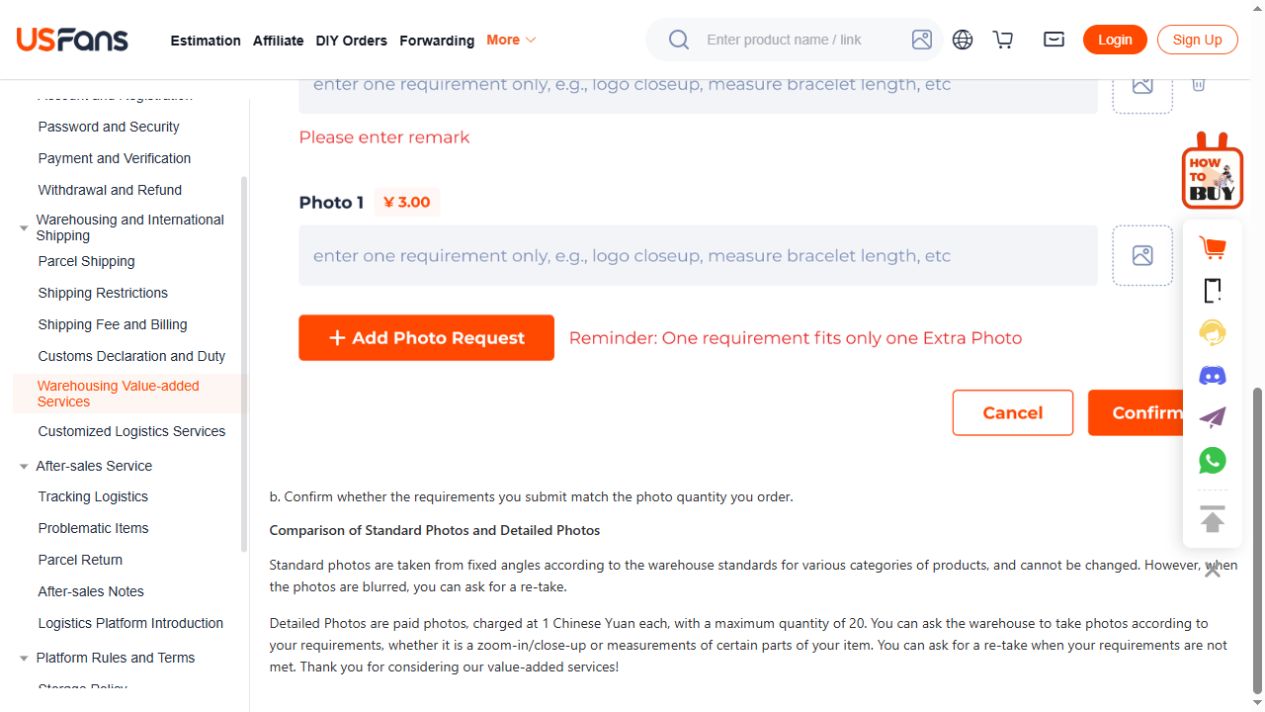
For a targeted dimension, the Detailed Photo help viewed on 30 September 2026 describes requesting measurements of particular parts of an item. Specify the stored item, the measurement line and the view that will show both endpoints; check that the number of requested photographs covers those instructions. This provides a way to ask for useful sizing information, not a promise that an ordinary label check has already measured the garment.
Do not budget the request from one help-page figure alone. The published text lists 1 CNY for each detailed photo and a maximum quantity of 20, but the illustration on that page shows ¥3.00 for an extra photograph. Compare the actual request's charge and description before confirming it. Neither conflicting figure establishes the price you will pay, and buying a photo does not replace checking the measurement method.
When to stop trying to make a size work
Move to another candidate when an essential dimension cannot be established, when the available sizes miss your needs or when the cut conflicts with the fit you want. Do not rely on an imagined alteration or an assumed amount of stretch to rescue an uncertain purchase.
Once the dimensions make sense, return to the ordering guide for the remaining option and purchase checks. Sizing is one part of the decision; it does not confirm the item's materials, condition or other properties.
Questions about USFans sizing
Should I always size up?
No universal adjustment works for every product and desired fit. Compare the specific chart and garment rather than applying the same change to every order.
Is a label photo enough?
It can help check the labelled option, but it does not measure the garment. Ask for relevant dimensions when the actual size is the unresolved question.
What if two sizes both look possible?
Compare the dimensions that affect your preferred fit, not just the label. Consider length, width and intended layering together. If the remaining uncertainty is unacceptable, choose a clearer alternative.
Compare the current product details and available options before adding this item to your shortlist.
View the product on OG Spreadsheet