USFans · English
USFans Sets: Check Every Included Piece Before Buying the Outfit
Check what a USFans set includes, compare each garment's fit and evaluate matching pieces before choosing a coordinated outfit.
On this page
A coordinated outfit can simplify getting dressed, but buying a set introduces two questions that a single-item listing does not answer: what is included, and whether every included piece will fit. A matching photograph is not enough to settle either question.
When comparing sets in a USFans spreadsheet, identify the garments you actually want. If the top is the main attraction and you would never wear the shorts, compare the set with a separate top rather than treating the extra piece as automatic value.
Read the selected option as a purchase, not a picture
A photograph may show a complete outfit while the options distinguish a top, bottoms or a bundle. Check the option wording and the order summary together. Accessories, shoes and other styling pieces should not be counted as included unless the selected offer says so.
Before paying, resolve these points:
- Which garments and how many pieces the selected option includes.
- Whether one size applies to the entire set or pieces can be sized separately.
- Which colour combination belongs to that option.
- Whether the displayed amount applies to the selected bundle or a different option.
If the option wording contradicts the main photograph, clarify the selection instead of assuming the photograph takes priority. Keep that information with the item link; the USFans buying guide explains how the saved choice fits into the order process.
A clothing-set example to compare
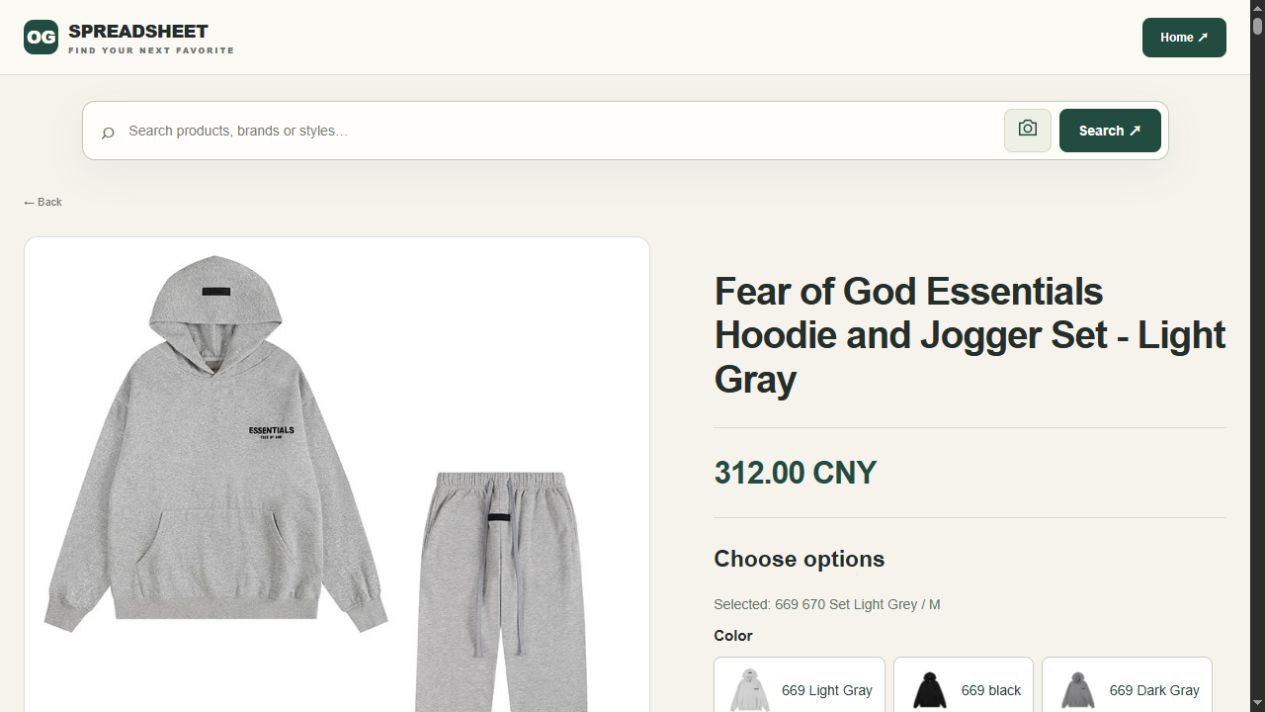
Use this clothing-set candidate to compare a coordinated outfit. Verify the selected option’s included garments and quantity before applying the top-and-bottom examples below; a styled photograph does not establish what you will receive.
Explore the clothing-set candidate on OG
Treat the product title as the listing's description, not a verification of brand authenticity or fabric performance. Evaluate the actual option against the outfit you intend to wear.
Check top and bottom fit separately
Use a T-shirt and a pair of shorts you already like as two separate references. Compare the top's chest width, shoulder arrangement and length; compare the bottoms' waist, rise and leg dimensions. Matching letter sizes do not guarantee a matching fit on your body.
| Situation | Sensible next step |
|---|---|
| Top dimensions work, bottoms are too narrow | Check whether separate sizing or separate items are offered |
| Bottoms fit, top is much longer than your reference | Decide whether that proportion suits the intended outfit |
| One combined chart has unclear headings | Clarify which measurements belong to which garment |
| Bundle permits only one size | Judge both pieces against that size before accepting the compromise |
Do not average your preferred top and bottom sizes into a middle size. That can leave neither piece suitable. The pants and shorts guide explains the lower-body measurements, while the size guide helps keep the comparison methods consistent.
Decide whether the coordination is useful
Consider the pieces together and separately. Would the top work with trousers you own? Could the shorts be worn with another shirt? If both answers are no, ask whether you genuinely want an outfit that works mainly as a pair.
Colour matching also deserves attention. Compare both garments under similar lighting when photographs allow it. Images taken with different exposure or white balance cannot reliably prove a subtle colour mismatch. Conversely, two pieces photographed together are easier to compare visually, but the image still does not establish identical fabric or dye behaviour.
Inspect the complete order when it arrives at the warehouse
Match each visible piece to the ordered option rather than relying on one overview photograph. Look for the expected top and bottoms, the selected colourway and the corresponding size labels where readable. If only one garment is shown, ask whether the second piece has arrived and whether it is recorded with the order; do not infer that it is hidden underneath.
For a visible issue, identify the affected piece and location precisely. “The shorts' left pocket seam” is more actionable than “the set looks wrong.” If you need a closer photo, request the detail that could resolve the question. The QC photo guide distinguishes this visual inspection from tests of comfort, fabric quality or durability.
Compare the cost of the outfit you will actually keep
Compare equivalent quantities: a two-piece bundle against two separate garments, not against one shirt. Include relevant delivery costs when available, but do not assume bundling always reduces international shipping. The packed parcel determines the shipping calculation, not the number of product pages used to assemble it.
If one piece has an issue, check the applicable return or exchange conditions before assuming it can be separated from the bundle. A preferred partial solution is not necessarily an available one. Keep the order details and photographs together when contacting support.
Does “set” always mean two pieces?
No fixed count should be assumed from that word alone. Read the specific offer and selected option for the included items.
Is a coordinated set better value than separates?
Only if the included pieces, fit and total cost work for you. An unused second garment does not make a purchase more useful simply because it came in a bundle.
Where can I compare other outfit options?
Return to the USFans spreadsheet or use the best-spreadsheet guide to organise a shortlist around pieces you will actually wear.
Compare the current product details and available options before adding this item to your shortlist.
View the product on OG Spreadsheet